Showing posts with label preservation. Show all posts

Sunday, 9 November 2014

New space for old books: #rbscg14

At the end of August (Wednesday 27 to Firday 29), the CILIP rare books and special collections group met at the University of Aberdeen for its annual study conference, this year on the theme ‘New Space for Old Books: Building for the Future’. The full conference programme with details of all the speakers and paper titles should still be online (.docx link).

The conference took place in the new University Library building, a dramatic blue-ish cuboid that stands above the city on a hill, and which has probably the best views of any library anywhere:


There were 17 papers in total, and I don’t propose to write them up individually. I felt that three main themes emerged: project management, knowing your collections, and managing the environment.

Projects
Project management is hard. Everyone said this. Major building projects are incredibly complicated and you will need to set aside a lot of time to manage them. Architects, tendering for services, buildling, weather, finances … Try not to have everything happening at once, but do try to have a plan from beginning to end when you start. In particular, it’s very useful to have the utilities and air conditioning designed together, even if they’re implemented in separate phases.

Be prepared with ideas about what you’d like for your buildings. Decisions are sometimes made very quickly – particularly if money suddenly becomes available – and you’ll want to be able to put your case forward well. Don’t be afraid to be ambitious and imaginative when you do.

Unexpected difficulties will come up. You can try and prevent some of these – for example, by checking the financial health of your contractors – but some of them, like the weather, you can’t. And sometimes it may be that things don’t move forward because there just isn’t sufficient institutional interest.

Therefore you need to be pragmatic at all stages. You might be able to keep your service running as usual through most or all of a project, but you might not be. Communicate with your staff and readers about this – it’s not the end of the world to stop doing things if people know why, and for how long. It’s likely that staff roles will morph during the project, as different areas of expertise are needed. This might be uncomfortable for people who’re already adapting to the changed priorities and working conditions, so, again, being honest and upfront about what’s happening and why is important.

Two resources were mentioned as being useful:

    The stuff
    We heard about the construction of several brand new buildings, all of which to some extent or other also involved the bringing together of previously separate collections and services from one or more institution, the creation of new services, and deliberate moves to engage with new audiences and communities.

    The Keep in Brighton brings together the special collections from the University of Sussex, the East Sussex Record Office and Brighton’s Royal Pavilion & Museums Local History Collections. From the point of view of readers, there is no difference between the collections: everything can be searched in one place and there are no differences on access rules and regulations. However, behind the scenes the collections remain separately owned and managed. This meant that there was significant work to do in harmonising policies and procedures (such as fetching, handling, registration requirements for readers, reading room rules and so on) before opening the service.

    The Hive, Worcester, is Europe's first joint university and public library. It combines the University of Worcester research collections, the collections of the Worcestershire Archive and Archaeology Service, the university research repository, the public library, the local government one-stop shop and more. It has admirable aims, even if its list of ten core values reads to me like something from 2012: inspiration, connection, aspiration, learning, integration, inclusivity, enduring values, well-being, sustainability, visibility. I was very pleased to hear about the efforts that had been put into staff training and customer service. Staff for the Hive were drawn in from all the different areas represented in the collections. They held staff workshops about how to answer customers’ queries: customers see all the staff as the same, whereas each person has a particular background and areas of expertise and non-expertise. They devised a very structured referrals process, so that people know what they should pass on (and how to do it) and what they can answer themselves. All this under the matra: ‘We welcome, we innovate, we respect [each other's specialisms]’.

    Two members of staff from the Glasgow School of Art library spoke about the work they had been doing (pre-fire, of course) to encourage wider use by their students and others. This included bringing artists and writers in to use the collections to ‘inspire, challenge or expand their practice’ through a project called the hatchery. This has included using the library space for installations and tableaux vivants. They cited the Library as Incubator project as a useful resource and inspiration for this work. In a newly designed special collections area they’ve also been running workshops and sessions based on the collection both to draw out items to use as inspiration, but also to explain to students how special collections and archives work. Various pieces – such as a camel (!) - have been inspired by this.

    Bringing lots of things together can obviously have its benefits. Aberdeen University Library special collections reported a huge increase in use once they were in the same building as the rest of the university library, instead of being hidden in the back of somewhere else behind 5 doors and several corridors... But I wonder whether collaboration sometimes isn’t just seen uncritically as a Good Thing by senior management, without consideration of the individual requirements of user groups and services.

    The key, it seems to me, to making a collaborative project work, or to getting the most from your collections is to know really well what it is you have in the first place. You have to invest time and effort in understanding the potential of your collections and the interests and needs of your current and potential future readers. I think this is a moral I hear in a lot of conferences because I never feel like I spend enough time getting to know my own collections...

    Environment
    Environmental control can be really difficult whether you’re in a historic building or a new one.

    Susie Bioletti spoke about the difficulties in managing the conditions in the Long Room at Trinity College Dublin. It’s Dublin’s second biggest tourist attraction, with something like 550,000 visitors annually. It gets loads of sunshine, there’s heaps of dust (that follows no known settling pattern), people bring in humidity and heat with them. Since 2004 they’ve been undertaking detailed surveys. They measure dust using a ‘loss of gloss’ technique in which glass microscope slides are placed in various locations and their reflectivity (or lack of it) is measured to give a value for the quantity of dust that has settled. They plot environmental recordings against a calendar in order to demonstrate trends and to pick out dates that are particularly bad because of particular events – a useful visual way to map this data.

    You can expend a vast amount of time, energy and money trying to keep a very tight control on temperature and humidity, when it could be a lot more efficient to take a more relaxed attitude (especially considering that facilities management is rightly increasingly concerned with wider environmental impact, carbon usage and so on). NAME from ORGANISATION summarised the recommendations of PD 5454 (the replacement for the BS 5454 standard) as:
    • know your collection and assess the risks that apply to it specifically
    • recognise the difference between mixed traditional archive materials which can’t be split up easily, and those specialist materials that need particular conditions
    • re-conceptualise environmental control as ‘allowing fluctuations within set parameters’ rather than ‘rigid control’
    • Keep the RH up in reading rooms – it’s a shock for documents to move from 50% RH in the store to maybe only 25% in the reading room. Temperature is less of an issue. (Would that this will end the scourge of 16ÂșC reading rooms...)

    These are all sensible and encouraging, and echo what was said at the late BL Preservation Advisory Centre ‘Knowing the Need’ conference last year.

    Several people in the audience, however, raised a very important point: it’s all well and good to adopt a more relaxed approach to conditions in which PD 5454 is a guide not a rule when considering your own collections. However, the stipulations in PD 5454 are routinely used by institutions loaning objects and books as the guide for acceptable storage and display. If you want to be borrowing items for display and exhibition, then you need to trying to meet these conditions for many places to allow you to borrow. I’m not sure we’ve found a way to square these two approaches yet.

    And last but not least
    1. The recurring theme of the conference was having the Queen visit to open your building. It’s not compulsory but it does get all sorts of otherwise disinterested people to notice you.
    2. Need a better name for your basement? Try ‘Garden Level’, a term used at – I think – St Andrews.
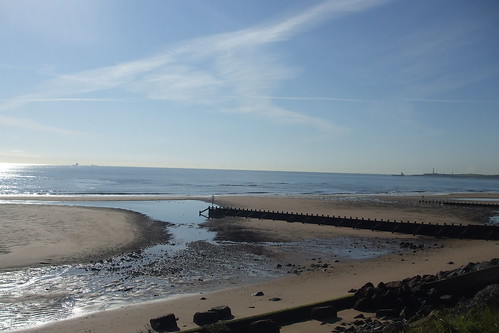
    3. Aberdeen is gorgeous. I can’t wait to go back:
    Thursday, 7 March 2013

    'Knowing the need', or, How I learnt to stop worrying and love preservation management

    This British Library Preservation Advisory Centre (#blpac, @bl_pac) conference took place on Friday 1 March 2013 to launch the new Preservation Assessment Survey (PAS) 'Knowing the need: optimising preservation for library and archive collections, February 2013' (pdf link).
    Jams, jellies by Loozrboy, on Flickr
    Creative Commons Attribution-Share Alike 2.0 Generic LicensePreserves, geddit?
      by  Loozrboy 

    I set up a quick and dirty archive of the #blpac tweets from the day on Evernote (via ifttt.com). The formatting isn’t great, but it may be handy. Slides from the presenters are online via the PAC.

    The first paper, from Caroline Peach, summarised the findings of the report

    Some of the stand-out findings:
    • 29% of collections are not catalogued, and 62% are not findable online.
    • Preservation measures are best in the fields of handling, security and fire protection. They’re worst in are storage, environment (the worst of all) and emergency control. Its clear that the areas that are best are those that can be controlled by library staff themselves or that have high institutional importance anyway (i.e. fire protection).
    • Only 2% of items are in an unusable condition.
    • There wer need more cataloguing, and better storage, environmental and emergency control. Of these, cataloguing is the priority – we preserved for future use, and we can’t use if its not catalogued.
    It didn’t seem surprising to me that these results aren’t so different from the previous survey (published in 2006). Getting an emergency plan understood, regularly reviewed and incorporated into staff training at an institutional level, for example, can be very tricky.

    Things we can do:
    • Incorporate good housekeeping procedures, e.g. cleaning, into our regular work.
    • Make sure everyone’s trained on the emergency plan.
    • Implement taregetted environmental improvements.
    • Better prioritising of work, bu conserving or creating surrogrates of the poor condition items in highest demand first. (I wasn’t convinced by all the conclusions drawn from the statistics, e.g. that we’re not boxing the right items.)
    Useful tools and reports:

    Alison Cullingford spoke about the RLUK Unique and Distinctive Collections report (forthcoming)

    Physical preservation isn't rocket science - we know what we need to do. So... why isn't it happening?
    1. Our organisations don't exist primarily to preserve special collections, and the things that need doing need contributions from people beyond the library who don’t necessary appreciate the importance.
    2. Maybe we have too much stuff, as a hangover from past collecting decisions or none decisions. Even if 70+% of our stuff is locally/nationally relevant (as noted in the report), that means that up to 30% is irrelevant, which is still a lot of stuff.
    3. Much of this is uncatalogued, so it won't be asked for by users, it’ll be kept in poor conditions, stored remotely, etc. This is both psychologically and practically very difficult.
    There are differences between types of library. Though all have problems:
    • academic and research libraries have too much stuff
    • smaller libraries have storage and buildings problems
    • public libraries are a big worry because of cuts, because they had more hidden collections to start with, because special collections have long been a lesser priority (on average) than in other libraries, and because they didn’t benefit from past retro-cataloguing funding and initiatives.
    How to improve?
    1. Keep it simple!
      • Take baby steps, e.g. cleaning. Make a little of this every week a core part of work, which is owned by everyone. Cleaning books isn't menial - you get to know the collections and get to know the problems.
      • Get something online, even if it’s not a full itemised catalogue. Paper finding aids just aren’t good enough any more.
      • Even if you can’t do anything else to improve storage, get your collections 15com up off the floor and make sure you insist on everyday good practice.
    2. Think value, use and priorities. The term ‘Unique and Distinctive’ is useful for this as it implies that importance extends beyond traditional (outdated) definitiong of special collections (i.e. old and valuable). The phrase is a way to explain value beyond money or age. Leeds University uses a typology of heritage (develop these), legacy (you'll keep but not extend), self-renewing (reference books), finite (stuff you do not want).
    3. Make most of opportunities. Don't be overwhelmed by having too-much-stuff, use the Copac collections tool to work out your strengths, backed up by graphs and numbers. Develop partnerships, for example regional emergency planning.
    Jane Henderson spoke about decision-making under the title, ‘Confidence or evidence’

    This was, for me, the most useful and inspiring paper of the day.  Jane packed an awful lot into her allotted time, and I won't be able to do it justice in this write up.

    Her main argument was that you shouldn't be exerting more time and effort on making a decision than the ultimate effect of that decision will have.  She outlined two methods of decision-making: rational decision-making (we try to assess all the variables and calculate the best solution) and heuristic decision-making (we look at the big picture and work out what the most important aspects are).

    We feel we should be using rational decision-making so that we can demonstrate the numerical basis to our actions.  Some of the problems with rational decision-making are that:
    1. You can't ever calculate all the answers in the complex situations we're examining.
    2. Very often the effort needed isn't worth it.  You might not need to 5 year's of survey data to tell that your poorly insulated library fluctuates in temperature too much. 
    3. You probably can't remove all the subjective elements, and if the decision is ultimately subjective you maybe shouldn't be dressing it up with charts and graphs.
    4. A mathematical decision may not be satisfactory.  Even if we come up with number indicating a potential risk, research has shown that people systematically over- or under-estimate such risks.  (Jane made the lovely comment that disasters are predictable events that haven't been considered together.) 
    Heuristic decision making, on the other hand, starts by ascertaining which criteria really matter.  You then only need to collect information on those, and finding a solution may be much more straightforward.

    Obviously, neither of these methods are perfect: heuristics can be very subjective, and the rational approach can have its place, especially where you need to provide 'proof' for your suggestions to be taken seriously.

    Jane used the (rather nasty) word satisficing to describe an attitude that chooses to be satisfied with the good enough, rather than aiming for perfection.  It's what we all have to do, especially when time and resources are limited, but I think we all find it a difficult concept in professional practice.

    Conservation-wise, satisficing means asking:
    • who is this for?
    • why is it being done?
    • whoe else care about this?
    • what does this object / collection mean to various people?
    Lastly, Jane commented on the skills and abilities of experts. They're experts because they
    • see what's not there
    • recognise patterns & exceptions in familiar situations
    • they are selective in picking decision problems
    • can imagine set of good outcomes
    • can mentally simulate routes to desires goals
    Experts' use of intuition can appear not to carry weight. When someone voices an opinion without any apparent evidence this often, especially in wider institutional contexts, doesn't carry much weight.   Jane ended by saying that we need to be bombastic in support of the value of expertise.

    Barry Knight talked about ‘Changing times, changing standards’

    The first edition of BS5454 was published in 1977. As no other standards available, people adopted BS5454 for all sorts of other climates and collections for which it wasn’t intended, which was very detrimental to many collections and buildings.

    The current policy is to manage environmental conditions rather than to attempt to impose straight-jacket control. PD5454 and PAS 198 adopt an evidence-based approach. We are required to examine risks, how long we want a collection to last, what the significance of the items is (and therefore what sort of surrogates might or might not be useful). Then you can determine appropraite target conditions, and the energy cost of those conditions.

    Plenty of different types of items can co-habit in the same conditions, but one size doesn't fit all. You therefore need to know your collection and what its specific needs are.

    Assessing lifespan isn’t necessarily a question of a number of years. The issue is the cost/benefit of conservation work, and the whether a surrogate would be satisfactory.

    Caroline Peach presented a session on preservation surrogacy - creating analogue or digital reproductions to extend the usable life of an item

    Consider what else we could do instead of surrogacy. (lining, de-acidification (expensive, can be effective, especially combined with cooler storage), boxing, safe handling, reduction in handling).
    The key attributes of a preservation surrogate are that it:
    • replicates as far as possible the characteristics of the original
    • is discoverable by users and is issued in lieu of the item
    • will be retained for agreed period of time 
    For long time the medium of choice has been microfilm, but today various pressures suggest that a move towards digital surrogacy may be useful.  Users, for example, are less willing these days to come to a specific physical location to consult a surrogate.

    Caroline was keen to question the decision-making behind the creation of surrogates.  The results of the PAC survey suggested to her that there was little clear planning behind what to microfilm or digitise.  In my experience, these decisions are mostly driven either by users (those who a willing to pay for a copy of a microfilm of an item, and the library keeps a master cop to use as a potential surrogate thereafter) or by external funding bodies who wish to contribute to digitisation projects.  I think Caroline's argument that we should choose items based on importance, use levels and condition is sensible, but doesn't necessarily tie in well with short-term funding issues.


    Gerry Slater, Policy Adviser at the Scottish Council on Archives, spoke about assessing the preservation needs in Scotland

    The position of archives in Scotland is very complicated. As well as National Records of Scotland there are at least 133 public bodies holding archives. The SCA aims to be a force for advocating for archives in Scotland, as well as offering practical services.

    Its National Plan for Learning achieved consensus approval in the Scottish Parliament, and is a good example of positive work. Another useful document is the ARMS Quality Improvement Toolkit.

    The SCA funded surveys of 11 collections, which revealed that the state of preservation work in Scotland is in almost all areas, worse than the UK and Ireland as a whole. The only area in which its doing better is handling. They’re working on positive ways to break this news and to offer practical help to repositories.

    What I'll take away from the day

    Managing the preservation of a historic collection housed in a space not built specifically with preservation in mind can seem like a Sysiphean task. This conference really helped me think about how I'm making practical and strategic decisions about preservation and conservation at work.  It helped reinforce some of my opinions about what is a priority and how we should address that, and also gave me new ideas about how to present these ideas convincingly to the audiences inside and beyond my workplace.

    Edited 8 November 2014 to update link to report.

    Wednesday, 24 November 2010

    Reach out!

    Yesterday I attended the Historic Libraries Forum annual conference, 'Going Public: how Outreach Can Benefit Your Library'.  The programme included papers and case studies from a wide range of institutions using their special collections to 'reach out' in a wide variety of ways.  At least half my working time (and more of my working thought, I'd say) is dedicated to outreach, so I agree totally with the overarching message of the day -- that special collections/historic library outreach is vital because we have to demonstrate that special collections are a vital, and valuable, part of the library.  We need to show that we're not elitist, and that our doors are open.  By engaging with new audiences, or with current audiences in new ways, we improve the lives of those audiences, raise the profile of and improve the the image of our institution (and our own part of that institution), and we can also learn new things about our collections. 
    'Reach Out!' by ~diP on Flickr
    'Reach Out!' by ~diP on Flickr

    Sheila Hingley started the day off with an account of the almost intimidatingly broad 'Education, Exhibitions, and Outreach' being done at Durham University Library Special Collections.  They're in the middle of a refurbishment programme which will create a dedicated, secure, exhibition space as well as an education room, a history of the book gallery, a gallery on the history of the university, and a cafe space.  The 'Treasures of Durham University' will open in January 2011 and will be desinged so that items can be replaced on a rolling programme, without having to continually re-write the whole exhibition.  The Heritage Collections have a dedicated Education Officer, initially funded through Heritage Lottery Fund money; a post common in museums, but as yet rare in libraries.  The schools offer is made through a website, 4schools, but there is also engagement with community groups, Durham Book Festival, local and family history events, and so on and so on and so on...

    Mark Purcell spoke about raising the profile of the c. 170 historic libraries owned by the National Trust.  (A good proportion of these are now catalogued and available on Copac, which was a pleasant surprise to me.)  The task of managing these libraries is terribly complicated; each library is different, and came to the Trust as part of the property in which its housed.  Until recently there was very little idea as to how many libraries there were, let alone what was in them, although this has changed in recent years with a serious cataloguing effort.  One comment particularly stuck with me: Mark explained that in some properties, cataloguers worked in public view (and therefore enduring endless comments about 'medieval laptops'); although this wasn't necessarily a very convenient working arrangement for the cataloguers, it really helped to raise the profile of the library with staff and volunteers at the property, as well as the visitors.

    The third talk that really made an impact on me was the last of the day.  Patti Collins spoke about work to utilise and promote the 'Treasures' of Manchester Central Library.  I found her talk really inspiring; she said that the special collections had at one point been viewed as elitist by the local council, and the Library had decided to overturn this view by making the special collections accessible to the public.  Patti pointed out that the books in a public library service belong 'to the people', and that the people should be able not just to see them, but to touch them.  The 'Treasures' programme has focussed on books with high visual appeal, to help overcome barriers of literacy and language, and they've held events for all ages and backgrounds in which visitors are allowed, invited, to handle the books themselves.
    '1598' by Ian Sane on Flickr

    This presentation prompted the (inevitable) discussion of access vs preservation, about which books were suitable to be handled, about the risks involved in letting people touch them, and about the requirement to preserve books for future scholars.  Concerns about damage and security are, of course, warranted, but it's all a matter of context.  In a public library, with books that aren't the only remaining copy of a text, I think it's superb to allow hands-on access.  In some academic settings, this might not be possible for one reason or another.  I think, however, that libraries should be looking seriously at developing handling collections of books, in the manner of museum handling collections.  Whether these would be replicas showing different binding structures, or 'real' books deemed to be sufficiently non-rare to allow handling, or a combination of the two, this would allow us to escape the endless, circling worries about damage, and move on to more productive topics such as 'how will we actually reach out, and who will we reach?'.