Showing posts with label historic libraries. Show all posts

Monday, 28 March 2016

Digitisation: practicalities, pleasures and pitfalls. #HistLib15

On 12 November last year I went to the Historic Libraries Forum annual conference, titled ‘Practicalities, pleasures and pitfalls: uncovering digitisation projects’. As ever, it was a really informative and useful day, and a great chance to catch up with people.

The theme of the day was digitisation: how to plan, run and maintain a successful project. As someone who'd been involved for the last 18 months as one of the partners in the UK Medical Heritage Library project, I could only wish that the conference had come round two years earlier: it would have been a great help! But no matter, the case studies and advice generously shared by the six speakers will certainly be of use as I plan projects in the future.


1. Calum Dow, Towsweb Archiving. ‘The importance of planning for digitisation’

Townsweb is a company that undertakes digitisation for individuals and institutions. Calum provided a very clear overview of what you need to consider when considering and planning a project.

Key points
  • Start with formal goals: use SMART objectives. Consider your desired outcomes, and the purposes of the digitisation: is it for for preservation, for display, for searchability, for access, for revenue? Who are the core users of the digital collection? What are your ideal timescales and milestones?
  • Communicate with your supplier! Make sure everyone understands your project goals, including the end purpose of the digitisation. Ensure your supplier is happy to keep you updated.
  • What to digitise? You might choose the items in greatest use, or at greatest risk. Ideal concerns have to be balanced with the items’ suitability in terms of condition and format.
  • Image outputs and resolutions: capture your master images in an open-source, non-proprietary format.
  • Access: metadata is vital to both your internal archive or document management system and your external website.
  • Practicalities: you’ll need to consider how and where digitisation will take place. Different formats and materials have different requirements. The better quality digitisation will usually be achieved offsite. Very rare or fragile items may have to be digitised on-site, but you need a room with controllable lighting, good power supplies, space, etc.
Resources

2. Damian Nicolaou, Wellcome Library. ‘Hand in hand: The ups and downs of partnerships in digitisation’

Damian presented several case studies of collaborative digitisation projects. There can often be encouragement or inducement to work collaboratively these days, either with commercial or non-commercial partners. The Wellcome Library works with lots of partners. There are commercial (eg ProQuest) and non-commercial (eg the Internet Archive) organisations doing the digitisation. And then there are the organisations that use the output (eg Zooniverse), funders (eg JISC), publishers, academic partners, software developers, licensing societies, and internal partners. Some of the projects are London’s Pulse, ProQuest Early European Books, and the UK Medical Heritage Library.

Various themes recurred throughout the case studies that Damian presented:
  • The difficulties of balancing your priorities against your partner’s (or partners’) priorities.
  • Are the people at the coal-face of the digitisation working directly for you or for someone else?
  • How to communicate well in order to manage relationships and expectations. Be clear who has responsibility for what.
  • When collaborating, you need to agree tight standards for images and metadata. Sometimes the standards are baggy and imprecise, and even though everyone is adhering to them, local practice variations still make interoperability difficult.
  • That doesn’t only apply to metadata: agree everything to do with the project in writing and even then interpretation may differ
  • Things will change over time, including the people and staff you’re working with in partner organisations, and the goals of those organisations can change, too.
  • Can you live with the conditions imposed by (commercial) partners? Are you prepared to do things their way?
  • Could you do it on your own?
  • Even ‘free’ things have costs.
Aside from the points directly relevant to collaborative working, there were other points to consider for all projects.
  • Consider use cases for the digitised material both for the present and future, before you sign: keep things open!
  • Broaden your reach by hosting the digitised content in multiple places (eg Wellcome Library website and the Internet Archive)
  • Don’t neglect your internal departments, eg the conservation team.

3. Abby Matthews, Sutton Archives. ‘From Cellar to Hard-Drive: The Challenges of Digitising Glass Plate Negatives’

On a much smaller scale than the Wellcome Library, Sutton Archives is digitising fragile glass-plate negatives. ‘The Past on Glass’ is a 2-year Heritage Lottery Fund project, working with negatives from a photography business that was abandoned in 1918. The collection of negatives is vast, and there were several issues to address.
  • The time-frame of project was set in advance, at the point of applying for funding, with little idea whether it was realistic or not, so part of the project has been working out how to best prioritise the work.
  • There is a large and unknown number of damaged plates, so they’ve prioritised those in good condition.
  • The project relies on volunteers, who have varying skill sets, so the workflows need to be written very carefully, with different volunteer roles available.
  • There are a limited amount of resources available, including space and equipment, so they have been inventive about how to make the most of the scanner.
Abby gave some really useful advice:
  • Do as much research as possible before you start. Seek advice. Know your options.
  • Think carefully about specific needs and long-term requirements.
  • Be prepared to go your own way.
  • Set strict project methodology and workflow, and make sure everyone follows it.

4. Jamie Robinson, John Rylands Library. ‘CHICC - Heritage Imaging at The John Rylands’

Jamie described the work of the The Centre for Heritage Imaging and Collection Care (CHICC), based at the University of Manchester Library. They work for the university and external organisations, too. With university items, they try to digitise the whole item when there’s an imaging request for one part of it, to save having to do further work again later on the same item. They are constantly updating their equipment, and make the most of new developments, for example working with a pigment specialist on how best to image gold used in printed books and manuscripts.

Key points
  • Different specialist materials need specialist imaging: this developing all the time.
  • New techniques, such as multi-spectral analysis, have a lot to offer, and are leading to new research avenues on the primary sources.
Key resources

5. Steven Archer, Parker Library, Corpus Christi College, Cambridge. ‘The legacy of Parker on the Web

Parker on the Web was one of the first major manuscripts digitisation projects. It launched in 2009. Steven spoke about how digitisation is only the beginning with a project of this scale and scope. The project has a large maintenance demand: corrections and additions to images, references and bibliographies appear in semi-annual releases. In addition to this, the interface is now starting to show its age to some extent, so plans are underway to launch a new version in due course.

Steven also had some interesting reflections on the way digitised content has changed reading room culture. Remote access gives the librarian much less idea what people are working on, and thus fewer outlets to help them! They hope that the new version of Parker on the Web might have more facilities for interaction between scholars working on the manuscripts.

Some resources mentioned:


6. Naomi Korn, Naomi Korn Copyright Consultancy. ‘Copyright issues in digitisation’

You can't consider digitisation without considering copyright. And copyright is complicated. Works whose authors died before 1969 and whose works weren’t published by 1 August 1989 are still in copyright until 2039. Something that looks like it might be 'one' item, like a scrapbook or diary, might have multiple copyright holders. Naomi had some very practical advice for how to manage rights in (our rights (or lack thereof) to digitise and reproduce) and rights out (what rights we’ll grant other people to use the digitised images).

Key points:
  1. Be aware what the digitisation contract says re: what’s expected and required. You need to exercise due diligence!
  2. Be aware of layers of rights: for example, cuttings stuck into a diary. Resources are needed to check and clear rights.
  3. Rights management is risk management.
  4. Check what the terms are regarding the licences on the digital images. Heritage Lottery Fund projects are required to use a CC-BY-NC licence, so you need to ask rights holders for this level of permission. When asking for rights you can ask for equivalent rights, or ask for as much as possible (but latter has risk that rights holders will say no as asking too much.)
Tools for reverse image searches (to try to uncover image sources)

Conclusion

So, to sum up… Knowledge is power when thinking about a digitisation project. The more detail and understanding you have about the materials you want to digitise, the easier the planning and implementation should be.
  • Think before you act! Know your collections. (Really know your collections.) Know your audience(s).
  • Think about the future: allow for possible new uses.
  • Host it far and wide – the more places, the better.
  • Have clear project plans and workflows.
  • Talk to everyone as much as possible, and don’t forget your internal partners and collaborators.
  • Plan for what happens after the project finishes: how do you maintain it?
  • Factor in the time and money involved in copyright clearance from the start.

Sunday, 9 November 2014

New space for old books: #rbscg14

At the end of August (Wednesday 27 to Firday 29), the CILIP rare books and special collections group met at the University of Aberdeen for its annual study conference, this year on the theme ‘New Space for Old Books: Building for the Future’. The full conference programme with details of all the speakers and paper titles should still be online (.docx link).

The conference took place in the new University Library building, a dramatic blue-ish cuboid that stands above the city on a hill, and which has probably the best views of any library anywhere:


There were 17 papers in total, and I don’t propose to write them up individually. I felt that three main themes emerged: project management, knowing your collections, and managing the environment.

Projects
Project management is hard. Everyone said this. Major building projects are incredibly complicated and you will need to set aside a lot of time to manage them. Architects, tendering for services, buildling, weather, finances … Try not to have everything happening at once, but do try to have a plan from beginning to end when you start. In particular, it’s very useful to have the utilities and air conditioning designed together, even if they’re implemented in separate phases.

Be prepared with ideas about what you’d like for your buildings. Decisions are sometimes made very quickly – particularly if money suddenly becomes available – and you’ll want to be able to put your case forward well. Don’t be afraid to be ambitious and imaginative when you do.

Unexpected difficulties will come up. You can try and prevent some of these – for example, by checking the financial health of your contractors – but some of them, like the weather, you can’t. And sometimes it may be that things don’t move forward because there just isn’t sufficient institutional interest.

Therefore you need to be pragmatic at all stages. You might be able to keep your service running as usual through most or all of a project, but you might not be. Communicate with your staff and readers about this – it’s not the end of the world to stop doing things if people know why, and for how long. It’s likely that staff roles will morph during the project, as different areas of expertise are needed. This might be uncomfortable for people who’re already adapting to the changed priorities and working conditions, so, again, being honest and upfront about what’s happening and why is important.

Two resources were mentioned as being useful:

    The stuff
    We heard about the construction of several brand new buildings, all of which to some extent or other also involved the bringing together of previously separate collections and services from one or more institution, the creation of new services, and deliberate moves to engage with new audiences and communities.

    The Keep in Brighton brings together the special collections from the University of Sussex, the East Sussex Record Office and Brighton’s Royal Pavilion & Museums Local History Collections. From the point of view of readers, there is no difference between the collections: everything can be searched in one place and there are no differences on access rules and regulations. However, behind the scenes the collections remain separately owned and managed. This meant that there was significant work to do in harmonising policies and procedures (such as fetching, handling, registration requirements for readers, reading room rules and so on) before opening the service.

    The Hive, Worcester, is Europe's first joint university and public library. It combines the University of Worcester research collections, the collections of the Worcestershire Archive and Archaeology Service, the university research repository, the public library, the local government one-stop shop and more. It has admirable aims, even if its list of ten core values reads to me like something from 2012: inspiration, connection, aspiration, learning, integration, inclusivity, enduring values, well-being, sustainability, visibility. I was very pleased to hear about the efforts that had been put into staff training and customer service. Staff for the Hive were drawn in from all the different areas represented in the collections. They held staff workshops about how to answer customers’ queries: customers see all the staff as the same, whereas each person has a particular background and areas of expertise and non-expertise. They devised a very structured referrals process, so that people know what they should pass on (and how to do it) and what they can answer themselves. All this under the matra: ‘We welcome, we innovate, we respect [each other's specialisms]’.

    Two members of staff from the Glasgow School of Art library spoke about the work they had been doing (pre-fire, of course) to encourage wider use by their students and others. This included bringing artists and writers in to use the collections to ‘inspire, challenge or expand their practice’ through a project called the hatchery. This has included using the library space for installations and tableaux vivants. They cited the Library as Incubator project as a useful resource and inspiration for this work. In a newly designed special collections area they’ve also been running workshops and sessions based on the collection both to draw out items to use as inspiration, but also to explain to students how special collections and archives work. Various pieces – such as a camel (!) - have been inspired by this.

    Bringing lots of things together can obviously have its benefits. Aberdeen University Library special collections reported a huge increase in use once they were in the same building as the rest of the university library, instead of being hidden in the back of somewhere else behind 5 doors and several corridors... But I wonder whether collaboration sometimes isn’t just seen uncritically as a Good Thing by senior management, without consideration of the individual requirements of user groups and services.

    The key, it seems to me, to making a collaborative project work, or to getting the most from your collections is to know really well what it is you have in the first place. You have to invest time and effort in understanding the potential of your collections and the interests and needs of your current and potential future readers. I think this is a moral I hear in a lot of conferences because I never feel like I spend enough time getting to know my own collections...

    Environment
    Environmental control can be really difficult whether you’re in a historic building or a new one.

    Susie Bioletti spoke about the difficulties in managing the conditions in the Long Room at Trinity College Dublin. It’s Dublin’s second biggest tourist attraction, with something like 550,000 visitors annually. It gets loads of sunshine, there’s heaps of dust (that follows no known settling pattern), people bring in humidity and heat with them. Since 2004 they’ve been undertaking detailed surveys. They measure dust using a ‘loss of gloss’ technique in which glass microscope slides are placed in various locations and their reflectivity (or lack of it) is measured to give a value for the quantity of dust that has settled. They plot environmental recordings against a calendar in order to demonstrate trends and to pick out dates that are particularly bad because of particular events – a useful visual way to map this data.

    You can expend a vast amount of time, energy and money trying to keep a very tight control on temperature and humidity, when it could be a lot more efficient to take a more relaxed attitude (especially considering that facilities management is rightly increasingly concerned with wider environmental impact, carbon usage and so on). NAME from ORGANISATION summarised the recommendations of PD 5454 (the replacement for the BS 5454 standard) as:
    • know your collection and assess the risks that apply to it specifically
    • recognise the difference between mixed traditional archive materials which can’t be split up easily, and those specialist materials that need particular conditions
    • re-conceptualise environmental control as ‘allowing fluctuations within set parameters’ rather than ‘rigid control’
    • Keep the RH up in reading rooms – it’s a shock for documents to move from 50% RH in the store to maybe only 25% in the reading room. Temperature is less of an issue. (Would that this will end the scourge of 16ÂșC reading rooms...)

    These are all sensible and encouraging, and echo what was said at the late BL Preservation Advisory Centre ‘Knowing the Need’ conference last year.

    Several people in the audience, however, raised a very important point: it’s all well and good to adopt a more relaxed approach to conditions in which PD 5454 is a guide not a rule when considering your own collections. However, the stipulations in PD 5454 are routinely used by institutions loaning objects and books as the guide for acceptable storage and display. If you want to be borrowing items for display and exhibition, then you need to trying to meet these conditions for many places to allow you to borrow. I’m not sure we’ve found a way to square these two approaches yet.

    And last but not least
    1. The recurring theme of the conference was having the Queen visit to open your building. It’s not compulsory but it does get all sorts of otherwise disinterested people to notice you.
    2. Need a better name for your basement? Try ‘Garden Level’, a term used at – I think – St Andrews.
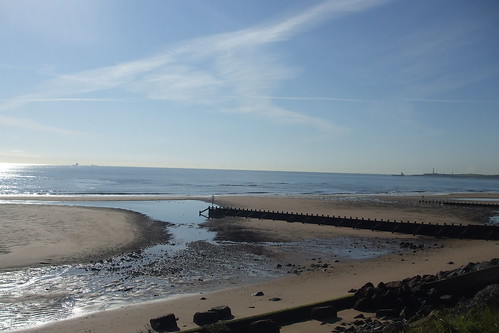
    3. Aberdeen is gorgeous. I can’t wait to go back:

    Wednesday, 26 September 2012

    Book history heaven in Antwerp: the Plantin-Moretus Museum

    Earlier this month, in a whistle stop visit to the wonderful Belgian city of Antwerp, I spent a very happy couple of hours in the Plantin-Moretus Museum.

    The museum is located in the former premises of the Plantin-Moretus family printing and publishing firm, which started when Christpher Plantin came to Antwerp in the 1550s and stayed in business until the 1860s.  In 1876 the premises, library, archives, furnishings, typographical material, printed stock and artworks were sold to the the city and country to be preserved as a museum. Today the former printing house, family residence,company and family archives are recognised as a UNESCO World Heritage Site, and they open year-round (excluding Mondays) as a well-appointed and presented museum. 

    The premises, known as the Golden Compasses, comprise several town houses acquired by the family over the centuries, surrounding a beautiful courtyard garden and opening off a lovely little square, Vrijdagmarkt (we sadly didn't get a chance to try any of the cafes or bars dotted around its edges). The various rooms display books and papers from the libraries and archives, including a splendid collection of incunables as well as the expected collection of publications (over 90% complete) printed by the Officina Plantiniana.  Furnishings include sumptuous seventeenth- and eighteenth-century Spanish Mechelen gilded leather wall 'paper', something I'd never seen before.  The printing house shop still retains shelves of books behind a grill, weights for checking the coinage proffered by customers, and a copy of the Librorum prohibitorum index--the list of books prohibited in the Spanish Netherlands--is displayed on the wall by the entrance.  The correctors' room displays proof copies of works in a dazzling selection of languages, marked up by early-modern correctors.

    The printing room contains five working seventeenth- and eighteenth-century hand presses, and the two oldest surviving presses in the world, which date from around 1600.  Along one wall are a number of type cases, holding type both familiar (roman and blackletter type for printing in Latin or German) and unfamiliar (Hebrew type and type for printing music were both displayed).  Next door is the type store: tonnes of letters stored in shelves from floor to ceiling. 

    Upstairs a library or three, displays of cartographic and music printing, the type foundry and much more.  Two hours wasn't nearly long enough, and I'm planning a repeat bibliographic pilgrimage before too long at all.  If you are even vaguely interested in the history of printing and ever find yourself in Antwerp, do go there!

    Sunday, 23 September 2012

    Useful links from #rbscg12

    Further to my reflections on the CILIP Rare Books and Special Collections Group annual conference, 'Speaking Truth to Power', here are some of the useful webpages, projects and articles that were mentioned during the conference.

    Collections currently or recently under threat


    Collaborative digitisation projects


    Other projects and libraries


    New use(s) of library space


     Reports


    Blog post


    Tools and resources

    • COPAC collections management tool: "Libraries are continually faced with difficult decisions about what materials to keep, what to remove and what to conserve. At the moment, identifying whether items are rare, or indeed unique, within the UK is a time-consuming and expensive manual process. Our goal is to look at how Copac can make a real difference for collections managers. By making Copac data work harder and building the prototype on top of its extensive database, the collections management tool can provide valuable information from the catalogues of the UK’s major research libraries alongside rare collections held in museums, scholarly societies and university special collections." 
    • Information about the 2014 Research Excellence Framework (REF)

     Organisations, recognition and funding bodies


     Articles

    Saturday, 22 September 2012

    Speaking truth to power: Rare Books Group annual conference 2012 (#RBSCG12)

    The annual Rare Books and Special Collections Group conference took place on 12-14 September at Lady Margaret Hall, Oxford.  This was the first year I was able to attend the conference, and I have to thank the CILIP East of England branch for financial support via their small grants fund.  I also must thank the RBSCG committee for organising a superb conference, the speakers for being so interesting, the other attendees for being friendly, and the staff at LMH for excellent hospitality.

    The title of the conference was ‘Speaking Truth to Power: Making Special Collections Work in Times of Recession’, so fundraising, advocacy and outreach were major topics of conversation.  I’ve written up a narrative account of the conference for the East of England branch newsletter, Sunrise, which should be available later in the Autumn. What follows here are my thoughts arranged under what I felt were the main themes to emerge from the conference.  I’ve compiled a separate list of useful webpages, projects, reports and articles.

    It’s fair to point out that I’ve always traditionally been sceptical about what university development offices do: I’ve had my fair share of half-hearted begging letters from my old college, and feel pretty cynical about their attempts to wring money from me (they know I’m a librarian, so I really don’t know why they try...). Remarkable to relate, this conference really changed the way I feel how we can engage with fundraising, and so my reflections seemed to have turned out more like a manifesto.

    Show Don’t Tell

    Our collections are our best and most powerful advocates, not only for themselves and for the library, but for the whole institution. The collections are most effective when people see and touch them up close and personal.  The ‘thingyness’ of our things matters; a digital reproduction is nice, but it just isn’t the same as the real thing, and allowing people not only to see, but to touch, gives them a big thrill and makes them feel important and valued.  Christopher Parking described that the physicality of objects is an important part of contemporary museum education practice, where the focus is on  handling collections, kinasthetic learning, and enquiry-based learning. School groups no longer just follow clipboard trails around objects safely kept behind glass.

    We should be getting the important people inside and outside our institutions into our libraries to see just what it is that makes us special.  It’s no use just writing an email or a report describing what we hold: people have to come and see it to really understand.  Obviously it’s not always feasible to let everyone handle our objects, but don’t discount the impact it can make when it is possible to allow that.

    Know Your Collections

    We, as librarians, are fundamental in making our collections work, as we’re the people who know most about them.  We should be prepared to market ourselves as the people who can interpret the collections. There's something in most special collections that will appeal to everyone and anyone, so librarians are vital because we know what that item will be. This can make a big difference when, for example, the development office are bringing round potential donors.  We’re also important because we’re the people who know best just what a difference extra funding could make.

    Our knowledge as librarians is what can make a big difference to academics, too.  They need access to our holdings to support their teaching, and they need access to our knowledge to help further and inform their research. Central to getting our collections used in research is getting them all catalogued, not only locally but as part of national and international indexes, and making the catalogue data available in useful ways.

    It’s no longer acceptable for institutions to have basements of unknown collections, often the legacy of indiscriminate and undocumented collecting in the past.  So we need to take the initiative in working out what we have.  This is something that Manchester Public Library have been doing during the current refurbishment: they’ve been assessing what was, and what should be, stored in their closed stacks, and working out how that can be used in the future.

    Know Your Institution

    It’s not always easy to do, but you need to work out who has the power in your institution, and be prepared for the fact that once you’ve identified who that is, they’ll probably keep changing.  Alison Cullingford noted that people can have positive power (they can make things happen) and negative power (they can stop things happening).

    Mark Nicholls gave a very clear account of the ways in which we can gain power for ourselves and influence those others who hold the positive and negative power.  He notes that "The worst mistake of a college (or any) politician is to be absent": we should do what we can to get on as many committees as possible and to cultivate allies on the others.  It’s important, he noted, to realise that those in charge can and will make decisions quickly when the time is right.  We have to be good at working out what ideas are right for the moment.  This gets easier as time goes on: one successful project, and attendant praise for the institution, will prime the organisation (and its nay-sayers) for further success.

    Neil MacInnes and Judy Faraday both described the ways in which they were using special collections to further the aims and agendas of their institutions.  Manchester Public Libraries special collections are being used to engage communities that the local authority holds as priorities, including black and ethnic minority communities, place-based communities, and young people.  The materials held by the John Lewis archives and the community archives centred around the locations of John Lewis stores helps to support the partnership’s business cycle.  It does this both by providing materials for business use, including publicity and design, but also by creating community support and interest.  I suppose that you could call this latter effect ‘soft advertising’ - in any case, it’s part of the partnership’s commitment to corporate responsibility.  It’s important to be explicit about how your activities are supporting the mission and goals of your organisation.  Don’t just do it, but make sure everyone knows you’re doing it.

    Know Your Audience(s)

    We have lots of different audiences for our collections, activities and fundraising efforts.  Our traditional audience, academic readers, are still very important. Anne Welsh commented that their voices can be important in times of uncertainty, and that their support for services and collections can be vital.

    There’s a general support for libraries and special collections amongst the general public.  Although there’s often a rather clichĂ©d and unfair impression that we’re just old and dusty, this support is still something we can and should work with.  Richard Ovenden mentioned the one-day display of a copy of Magna Carta at the Bodleian: lots people will queue up to see something if you advertise it well, and this will generate positive publicity for your institution.

    When considering external funders, Mark Nicholls advises that we can improve our image easily for example by producing a professional and attractive annual report.  Oliver Urquhart Ivine described British Library work creating partnerships such as that with the Qatar Foundation.  They took time and effort to research potential donors in depth, and to plan how they will approach and encourage potential donors.  This advice chimed with Mark Nicholls caution that we have to anticipate potential objections to our plans and be prepared to knock them away one by one.

    When planning fundraising efforts, Sean Rainey commented that it’s important to realise that there’s a difference between funding priorities and fundraising priorities. We have to recognise what things donors will and won’t be prepared to donate towards.  We won’t have much success campaigning for retrospective conversion, small facilities improvements, and supplies and equipment purchases, so we need to look critically and objectively at our plans and decide what we can realistically achieve via which means.

    Don't Be Complacent

    In straightened times it’s important to keep ourselves front and centre in the minds of the people who make the decisions.  This might seem mercenary and drastic, but it can make all the difference.  There are plenty of collections and collecting areas that are sadly under risk.  As well as recent high-profile threatened libraries, Richard Ovenden and Alison Cullingford both identified twentieth-century collections that haven’t traditionally been regarded as ‘special collections’ as areas that may not be receiving the attention they need now to be preserved for the future.

    Fundraising, I think, isn’t something that comes naturally or easily to librarians.  We like to think that the importance of our collections is not merely monetary, and that their cultural and intellectual value will ensure they receive adequate support without our having to bring out a begging bowl.  But that, sadly, isn’t the case.  We need to make the case for our collections, and to use the existing mechanisms for fundraising (development offices, funding bodies, donors, and so on) to attract support.  Sean Rainey ended his paper by enjoining us not to let fundraising slip down the to-do list, and I’ll echo what he said: start working on it now.

    Monday, 21 November 2011

    HLF confernece report 2: using what we have

    I'm grouping my write-ups from the HLF conference loosely according to topic, not in the order appeared.  This is the second post of three.

    Collections in a Cold Climate

    Alison Cullingford, of @speccollbrad, 100 Objects Bradford, RLUKUDC and other fame, gave the third talk of the day. She spoke about 'Collections in a Cold Climate: Caring for and Sharing Special Collections in difficult times'.

    Alison offered 5 arguments in favour of special collections, and 10 things for us to think about and do. (She apologised that this doesn't add up to 23.)

    Selling points:

    1) Special collections are a treasure trove. Their uniqueness is not merely pretty frippery: it can have hard financial benefits.

    2) We're about much more than text: it doesn't matter if Google Books has the text, your particular book is still important because of its story.

    3) The power of the real: things being online isn't the same - people still want to see the real physical object.

    4) Learning, teaching and research. The style of teaching (across school and university, I think), is increasingly geared towards engagement with primary material. We're the people that can make that happen.

    5) Sharing via Amazing! New! Technology! is now easier that every before. There are fewer gatekeepers to the outside world: we can talk about our own collections, rather than going through intermediaries.

    The things we should think about in caring for and sharing our collections are:

    1) Proclaiming our value. Don't hide light under a bushel, don't be afraid to use robust language and to speak in the jargon that the people with the money respond to.

    2) FInd partners and use them. Work out who's speaking on your behalf in your organisation and make use of them. Identify the people with soft power, too.

    3) Be 'lazy' - don't try and do everything yourself, but try and find people who'll do it for you, e.g. collaborating with museums on schools work.

    4) Explore new tech. Know what's out there, but you don't have to use it all.

    5) Think about mission and strategy, i.e. work out how everything fits together, and which things you don't have to do.

    6) Make the best use of your, or your staff's time. Staff time may be the only resource you have, so value it.

    7) Dare to think creatively. You can't do more of the same with less of the same, but you can do something different instead. In Alison's case this means exhibiting online, not in a physical space.

    8) Skills matter. Use the Rare Books and Special Collections Group framework (or the ALA equivalent) to campaign for training. Market yourself as someone with specialist skills and knoweledge.

    9) Know what's going on - what the agendas are, and how you can use them to your advantage.

    10) Share your own number 10. Mine is to use the enthusiasms of the people that you have - Alison added that if you do that you have to account for what'll happen if they leave!

    If you want to know more, Alison has a book coming out soon.

    The RLUK Unique and Distinctive Collections Project will be producing a report about special collections of all kinds and not just in RLUK libraries next September.

    Using volunteers at Bishopgate's Institute

    Edward Weech spoke about how the Library of the Bishopsgate Institute using volunteers to enhance what they can do and offer.  He was clear that they do not use volunteers to replace paid staff, but use them to work on specific projects that couldn't otherwise be undertaken.

    Volunteers are used in the library to help with a retrospective cataloguing project.  There are a number of rules governing the volunteers' work: each volunteer comes in for half a day per week, and there is a miniumum commitment of three months.  Their travel expenses are paid, are their work is also recognised with twice-termly tea and cakes, a newsletter, a volunteering certificate, and (for those who have volutneered for 40 hours or more) a reference.  It was noted that not all the volunteers want to have tea, cakes, newsletters etc. - some just want to get on and catalogue!

    Volunteers are generally recruited from retired librarians, library school students, and people currently working in libraries who would like to gain cataloguing experience.  Volunteers are expected already to have computing skills, and ideally to have knowledge of library work, library management systems, and possibly cataloguing.  There are around 6 volunteers at any given time.  The longest-serving has now been there four years, but some, especially those who have negotiated time away from work to participate, will only stay the minimum three months.

    All of the volunteers' work is checked by staff before it is unsuppressed on the OPAC.  This means that, along with training and supervision, there is quite a lot of staff time invested in the volunteering programme. Since the retrospective cataloguing project started in 2005, 50,000 records have been added to the catalogue in total, of which 8,600 were added by volunteers (that's about 17%).

    The benefits of the volunteer invovlement is not therefore that they're a cheap way of creating lots of catalogue records.  The benefits, as described by Edward are that the staff learn from the volunteers (whether they're students with new ideas, or more experienced librarians who have worked in other libraries), and that the Library and Institute are promoted by the volunteers and advocated for when they go elsewhere.

    Friends Organisations

    Karen Attar spoke about the Friends of Senate House Library. The Friends were founded in 1988, and in 2009 had a relatively modest membership of 140. Karen noted that the library's posistion within London, and within the University of London meant that it doesn't necessarily have a distincitve attraction for the general public.  However, the Friends have contributed to the Library, particularly through funds raised from bequests.  They have bought books and other materials, paid for conservation work and materials, paid for cataloguing, and have developed a 'Befriend a Book' programme.

    The Friends of Senate House Library organise a variety of events including talks, visits, book club meetings and a newsletter.  Interestingly, special exhibition viewings don't need to be 'private' - the addition of a curator talk and some refreshments makes it a good draw for members.