Showing posts with label marketing. Show all posts

Wednesday, 9 March 2016

John Dee: how I made the exhibition gifs

The RCP library has the largest known surviving collection of books owned by John Dee, the Elizabethan polymath. In several of these Dee’s signature has been over-written or obliterated by a man called Nicholas Saunder.

It’s possible to disentangle the two different signatures if you examine them very closely. As part of the exhibition research I edited an image of them in order to show Dee’s original signature and then Saunders’ over the top.

Astrologiae iudiciariae ysagogica. Jean Taisnier, published Cologne, 1559
I’d hoped to use this image in the exhibition proper, and to display it next to the book itself. The image didn’t make the final cut, but we’ve been using a gif (animated image) of the two different signatures fading in and out as part of the exhibition publicity.


I started with a high-quality close-up photograph of the signatures, and I edited it using Photoshop Elements. Other photo-editing programmes (such as are available, such as the free GNU Image Manipulation Programme) and would work just as well. The functions will probably look a bit different, though

As in the editing process I described earlier, you need to use layers to create gifs. Layers are like old-fashioned sheets of acetate that you can pile up on top of each other. You can edit what’s on each layer individually, and can set the transparency (and other attributes) of each layer.

You need to make one layer for each individual frame of the animation.

For this animation, the frames followed this progression:
  • Original image alone
  • fading in the layer which highlights Dee’s signature (ie by decreasing that layer’s transparency step by step)
  • fading in the layer which highlights Saunder’s signature
  • fading out the layer which highlights Dee’s signature
  • fading out the layer which highlights Saunder’s signature
  • original image alone.
I started with a copy of the Photoshop file I’d made to extract the two signatures. Then, for each frame of the animation, I did the following:
  • set the transparency(/ies) of the overlay layer(s)
  • duplicated the overlay layer(s) and background layer (you need to keep the originals to continue working with them)
  • used ‘Merge down’ to stick the overlay layer onto the background layer – to make the one single layer needed to run the animation
  • re-named this new layer to say which transparency value(s) were used.


The transparency value were more-or-less as follows:
  • No overlay
  • Dee on its own: 10%, 20%, 30%, 40%, 50%
  • Dee at 50% with Saunder at: 10%, 20%, 30%, 40%, 50%
  • Saunder at 50% with Dee at: 40%, 30%, 20%, 10%, 0%
  • Saunder on its own: 40%, 30%, 20%, 10%.
After all the layers were ready, I made sure they were in the correct order (you can drag and drop to move them around).

Then I duplicated the first and frames a few times so that they would show for longer.

So save as a gif us the File>Save As option, and choose ‘gif’ (‘CompuServe gif’) as the file type. Tick the ‘Layers as Frames’ box. In the next dialogue box, tick ‘animate’ and then choose the frame rate. Remember to save the Photoshop file, too, in case you want to change things later!


And that was it, more or less.


I used more-or-less similar processes to make the other exhibition gifs. Some were much more straightforward: I just took lots of slightly different photos of a book with the camera mounted on a tripod, in the fashion of traditional stop-motion animation. It’s then just a case of layering up those images, by cutting and pasting them into a Photoshop file.

Monday, 7 March 2016

John Dee gifs part the second

Following the success of the John-Dee-inspired gifs I put together for #musgif day in October 2015, our publicist asked if I could make a few more to use in the promotion for 'Scholar, courtier, magician'. So I duly obliged.


I was quite blown away by how popular all of the gifs were, and with the fulsome praise and enthusiasm they received especially among the early modern history crowd on Twitter.


They were picked up by various media outlets, too.It wasn't such a surprise to see one crop up on Hyperallergic, but New scientist used them, too. Pretty cool. (Although, if I'm honest, the fact-checking in that December 2015 article leaves a something to be desired. The more recent review is rather better, but gif-less, seeing as it went out in print.)

The gifs are successful because they fun to watch and because they add something to the understanding and experience of the books and painting by showing things you can't see from a photograph or from seeing the static item on display.

Watch this space for a post or two about how I did the photo editing on Dee's over-written signature and how I made the gifs.

Thursday, 22 October 2015

Rare books gifs - John Dee, volvelles, apples and things

Culture Themes is a twitter account that organises monthly themed days on Twitter, primarily for museums. This month it was museum gifs - #musgif - and I put together a couple for the RCPmuseum account from some of the star objects from the RCP's forthcoming John Dee exhibition.

To make the first three gifs, I set up the department camera on the department tripod and took a series of photos, stop-motion animation style. Then I layered up the individual images in Photoshop (other editing software is available), cropped them, resized them and saved them as gifs. To make the last, I took a pre-existing photograph and played about with it in Photoshop.

It was quicker and easier that I thought it would be, and I'm delighted with how well the gifs show off the materiality of the books.

If you like rare books gifs, then have a look at what's being posted on Tumblr at places like University of Iowa Special Collections.

One of twelve volvelles in Trithemius, Polygraphie, 1561. The title written on the fore-edge of this book suggests that it belonged to John Dee. It's a book about cryptography, and the volvelles are cipher discs used to encoding or decoding text.

Three-dimensional geometry explained with foldout diagrams in Euclid, trans Billingsley, The elements of geometrie, 1570. This was the first English translation of Euclid, and John Dee wrote an extensive preface to it.

A very hungry bookworm works its way through John Dee's annotated copy of Quintilian, Institutionum oratoriarum, 1540. 

Crab apple tree in Parkinson, Theatrum botanicum, 1640.

The RCP library has the largest known collection of books from John Dee's library. They're catalogued online in the library catalogue.
 
Addendum: I ended up making another three John Dee gifs and wrote up how I did it.

Sunday, 9 November 2014

New space for old books: #rbscg14

At the end of August (Wednesday 27 to Firday 29), the CILIP rare books and special collections group met at the University of Aberdeen for its annual study conference, this year on the theme ‘New Space for Old Books: Building for the Future’. The full conference programme with details of all the speakers and paper titles should still be online (.docx link).

The conference took place in the new University Library building, a dramatic blue-ish cuboid that stands above the city on a hill, and which has probably the best views of any library anywhere:


There were 17 papers in total, and I don’t propose to write them up individually. I felt that three main themes emerged: project management, knowing your collections, and managing the environment.

Projects
Project management is hard. Everyone said this. Major building projects are incredibly complicated and you will need to set aside a lot of time to manage them. Architects, tendering for services, buildling, weather, finances … Try not to have everything happening at once, but do try to have a plan from beginning to end when you start. In particular, it’s very useful to have the utilities and air conditioning designed together, even if they’re implemented in separate phases.

Be prepared with ideas about what you’d like for your buildings. Decisions are sometimes made very quickly – particularly if money suddenly becomes available – and you’ll want to be able to put your case forward well. Don’t be afraid to be ambitious and imaginative when you do.

Unexpected difficulties will come up. You can try and prevent some of these – for example, by checking the financial health of your contractors – but some of them, like the weather, you can’t. And sometimes it may be that things don’t move forward because there just isn’t sufficient institutional interest.

Therefore you need to be pragmatic at all stages. You might be able to keep your service running as usual through most or all of a project, but you might not be. Communicate with your staff and readers about this – it’s not the end of the world to stop doing things if people know why, and for how long. It’s likely that staff roles will morph during the project, as different areas of expertise are needed. This might be uncomfortable for people who’re already adapting to the changed priorities and working conditions, so, again, being honest and upfront about what’s happening and why is important.

Two resources were mentioned as being useful:

    The stuff
    We heard about the construction of several brand new buildings, all of which to some extent or other also involved the bringing together of previously separate collections and services from one or more institution, the creation of new services, and deliberate moves to engage with new audiences and communities.

    The Keep in Brighton brings together the special collections from the University of Sussex, the East Sussex Record Office and Brighton’s Royal Pavilion & Museums Local History Collections. From the point of view of readers, there is no difference between the collections: everything can be searched in one place and there are no differences on access rules and regulations. However, behind the scenes the collections remain separately owned and managed. This meant that there was significant work to do in harmonising policies and procedures (such as fetching, handling, registration requirements for readers, reading room rules and so on) before opening the service.

    The Hive, Worcester, is Europe's first joint university and public library. It combines the University of Worcester research collections, the collections of the Worcestershire Archive and Archaeology Service, the university research repository, the public library, the local government one-stop shop and more. It has admirable aims, even if its list of ten core values reads to me like something from 2012: inspiration, connection, aspiration, learning, integration, inclusivity, enduring values, well-being, sustainability, visibility. I was very pleased to hear about the efforts that had been put into staff training and customer service. Staff for the Hive were drawn in from all the different areas represented in the collections. They held staff workshops about how to answer customers’ queries: customers see all the staff as the same, whereas each person has a particular background and areas of expertise and non-expertise. They devised a very structured referrals process, so that people know what they should pass on (and how to do it) and what they can answer themselves. All this under the matra: ‘We welcome, we innovate, we respect [each other's specialisms]’.

    Two members of staff from the Glasgow School of Art library spoke about the work they had been doing (pre-fire, of course) to encourage wider use by their students and others. This included bringing artists and writers in to use the collections to ‘inspire, challenge or expand their practice’ through a project called the hatchery. This has included using the library space for installations and tableaux vivants. They cited the Library as Incubator project as a useful resource and inspiration for this work. In a newly designed special collections area they’ve also been running workshops and sessions based on the collection both to draw out items to use as inspiration, but also to explain to students how special collections and archives work. Various pieces – such as a camel (!) - have been inspired by this.

    Bringing lots of things together can obviously have its benefits. Aberdeen University Library special collections reported a huge increase in use once they were in the same building as the rest of the university library, instead of being hidden in the back of somewhere else behind 5 doors and several corridors... But I wonder whether collaboration sometimes isn’t just seen uncritically as a Good Thing by senior management, without consideration of the individual requirements of user groups and services.

    The key, it seems to me, to making a collaborative project work, or to getting the most from your collections is to know really well what it is you have in the first place. You have to invest time and effort in understanding the potential of your collections and the interests and needs of your current and potential future readers. I think this is a moral I hear in a lot of conferences because I never feel like I spend enough time getting to know my own collections...

    Environment
    Environmental control can be really difficult whether you’re in a historic building or a new one.

    Susie Bioletti spoke about the difficulties in managing the conditions in the Long Room at Trinity College Dublin. It’s Dublin’s second biggest tourist attraction, with something like 550,000 visitors annually. It gets loads of sunshine, there’s heaps of dust (that follows no known settling pattern), people bring in humidity and heat with them. Since 2004 they’ve been undertaking detailed surveys. They measure dust using a ‘loss of gloss’ technique in which glass microscope slides are placed in various locations and their reflectivity (or lack of it) is measured to give a value for the quantity of dust that has settled. They plot environmental recordings against a calendar in order to demonstrate trends and to pick out dates that are particularly bad because of particular events – a useful visual way to map this data.

    You can expend a vast amount of time, energy and money trying to keep a very tight control on temperature and humidity, when it could be a lot more efficient to take a more relaxed attitude (especially considering that facilities management is rightly increasingly concerned with wider environmental impact, carbon usage and so on). NAME from ORGANISATION summarised the recommendations of PD 5454 (the replacement for the BS 5454 standard) as:
    • know your collection and assess the risks that apply to it specifically
    • recognise the difference between mixed traditional archive materials which can’t be split up easily, and those specialist materials that need particular conditions
    • re-conceptualise environmental control as ‘allowing fluctuations within set parameters’ rather than ‘rigid control’
    • Keep the RH up in reading rooms – it’s a shock for documents to move from 50% RH in the store to maybe only 25% in the reading room. Temperature is less of an issue. (Would that this will end the scourge of 16ºC reading rooms...)

    These are all sensible and encouraging, and echo what was said at the late BL Preservation Advisory Centre ‘Knowing the Need’ conference last year.

    Several people in the audience, however, raised a very important point: it’s all well and good to adopt a more relaxed approach to conditions in which PD 5454 is a guide not a rule when considering your own collections. However, the stipulations in PD 5454 are routinely used by institutions loaning objects and books as the guide for acceptable storage and display. If you want to be borrowing items for display and exhibition, then you need to trying to meet these conditions for many places to allow you to borrow. I’m not sure we’ve found a way to square these two approaches yet.

    And last but not least
    1. The recurring theme of the conference was having the Queen visit to open your building. It’s not compulsory but it does get all sorts of otherwise disinterested people to notice you.
    2. Need a better name for your basement? Try ‘Garden Level’, a term used at – I think – St Andrews.
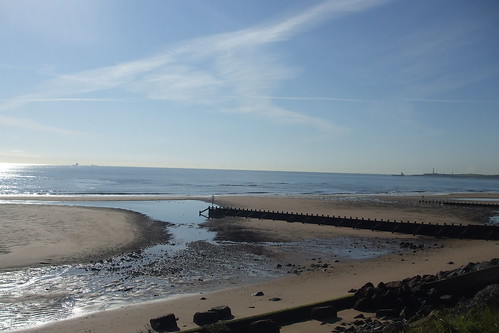
    3. Aberdeen is gorgeous. I can’t wait to go back:

    Sunday, 3 March 2013

    #libcampldn: finding practical solutions

    I managed to snag a last-minute ticket for the Library Camp London unconference held at Senate House Library on Saturday 2 March. Despite my early-morning wobble--did I really want to spend a day talking to people about difficult stuff?--I had a really good time, and am glad I went.  Big thanks to Andrew Preater, David Clover and Gary Green for organising it.

    With such a wide spread of sessions to choose from, it was necessary to have a method for choosing what to attend.  I decided not to try and be worthy or hard-thinking, but to go to what sounded like the most practically useful and/or the most fun sessions. So I steered clear of the Future of the Library, DRM, Open Access, Librarian Personalities, and even Radical Libraries (although I eagerly await write-ups of that one), and instead, apart from my fairly worthy hidden collections session, went with fun, low-stress and useful.

    Hidden Collections

    I pitched this session as a forum for discussing the problems described in the 2012 RLUK Hidden Collections report (and touched on in the OCLC Survey of Special Collections), and hopefully to share ideas and strategies for dealing with the problem.
    The Problem
    There are millions of uncatalogued, or insufficiently well-catalogued books, files, manuscripts, recordings, maps, pieces of sheet music, etc. etc. etc. in libraries of all kinds across the country.  Getting this stuff catalogued is hard because good cataloguing takes time and skilled staff.  In an environment where more and more new stock comes 'shelf-ready' (i.e. ready-catalogued by the company that supplies it, often not very well), the number of in-house cataloguers, especially in public libraries, is declining.  This means that there's no-one available in the institution who could possibly take on the cataloguing backlog.  Even in institutions no buying shelf-ready stock there are serious and worrying pressures on cataloguer numbers, and cataloguing projects don't seem to be sexy enough to attract much outside funding.

    Apart from the obvious reasons (no record = no-one can use it because no-one knows it's there ), hidden collections are bad because they are far more likely than visible collections to be left languishing in poor environments leading to serious preservation problems, or to be inappropriately disposed of by penny-pinching managers (especially in public libraries, sadly).  Their mere existence is also psychologically wearing on those who know they should be dealt with but don't have the resources to complete such work.

    Convincing the powers-that-be to fund cataloguing work can be difficult.  Reference libraries can struggle to prove their worth as they don't have circulation data to show usage levels.  Trial projects putting a small number of new records into the catalogue can demonstrate a sharp uptake in use of a particular set of material, but this isn't always what happens.

    Some digitisation projects aimed to deal with a large quantity of unavailable archive data have returned data that's so poor as to be almost useless.  There's a fear about spending money on such projects in case they're not worth the effort.

    It can be difficult to know where to start when addressing your hidden collections problem.  Obviously it's best to start with what users want the most, but how can they know they want something that's hidden?  It's a worry to some that previous projects haven't focussed on the right stuff: maybe we should concentrate on more modern collections rather than the traditional blue-chip items such as early-printed books?

    Knowledge about collections and projects is very often only recorded in people's heads.  Once that person goes, all the information is lost.  This happens time and time again.

    Solutions
    Using our usersA project at the Institute of Education has engaged the help of specialists to improve the metatdata on newly-created brief catalogue records for historic textbooks. The discussion acknowledged that user-tagging facilities in catalogues often don't elicit many responses (even on Amazon!), but we agreed that maybe actively asking for specialist help might be much more successful than passively including 'tag this' buttons without explaining why users would want to bother.  Rare books users often, for example, notice that ESTC numbers in catalogues are incorrect.  We should have 'Is this record wrong? Please let us know!' buttons on records, just like COPAC does.  You can also let users tag based on a fixed vocabulary, rather than free text.  I was inspired with the idea of letting users tag rare book records with a selection from the RBMS Controlled Vocabularies, such as binding types and illustration terms.  I'd love to hear if anyone thinks this is possible, feasible, sensible...?

    What do they want?  We should be formalising a link between enquiry and reference work on one side and cataloguing and digitisation on the other: the enquiry people know what people are asking about.  In a small library it'll be the same people doing both, but in a large library a formal reporting mechanism would be very useful.  You can use your catalogue data to see what people want and can't find: look at which searches are turning up no (or very few) results, and then use this as a basis for choosing what to catalogue (or how to improve the cataloguing), what to digitise, or what to acquire.

    Publicity.  We need to publicise the material that we have catalogued so that the work can be shown to be a success.  This means talking to researchers, to people who write research grants, to our other users (such as people looking for dissertation topics), blogging our collections, holding events around them, etc. etc.

    Get the issue up the agenda.  We all appreciate the problem of and with hidden collections, but we mustn't assume that people higher up in our organisations either know that the problem is there, or why it is a serious problem.  The RLUK presents a opportunity to raise awareness, for example by including it on the agenda at a library committee meeting.  Summarise the findings, explain the local context, and maybe (just maybe) someone will take it up higher in the hierarchy. 

    Know your collections.  There is nothing more important in librarianship than knowing your collections.  It's not necessarily easy to do, of course, but when you start somewhere new it's important to ask questions about the shelves/boxes/collections that seem overlooked. What is it? Where did it come from? What's the plan?  And then document this information so that it isn't lost all over again in the future.  It's important to your users that you also know what else roundabouts is relevant to them - we can cross-publicise collections in other libraries.

    I was really pleased with how the session went.  A high proportion of the attendees spoke up, and shared perspectives from a range of different types of library and collection.  There were some keen 'amplifiers' (i.e. tweeter) and this facilitated some useful back-channel comments. As well as voicing concerns and problems, the conversation developed naturally into what we can actually do.. 

    Library Displays
    Pitched by a school librarian looking for inspiration, I found that this session really helped me clarify some of my own marketing plans, even though I don't do 'displays' in the traditional sense.  Ideas that Ill be thinking about using at work include:
    • investigating the non-fiction/science book prizes, and science prizes (e.g. Ignoble, Nobel, Darwin) to base publicity on the shortlists/winners.
    • making a note of national/international book days and events (e.g. World Book Day, World Poetry Day) and national/international history weeks and months (e.g. black history month, LGBT history month) to do things that tie in.  Although we're not primarily a book-ish institution, it might be effective to tie in library things with events that staff might have heard about on the radio/TV.
    • would blind date with a book work in a professional library context?
    • make an annual list of all this stuff, and--when something crops up that I'd forgotten about (it's usually small things, like Christmas...)--make sure to include them for next year.
    • make sure to record what was done this year in order not to repeat too closely next year, but also to build on success.
    Speed Networking
    I turned up late for this because I was distracted by The Itinerant Poetry Library (which is marvellous and must be seen to be believed) and therefore set a cat amongst the neatly-organised pigeons. A school librarian, Dominique, kindly let me circle round with her, and a met a selection of people familiar and new. I was very impressed by the way Liz Jolly facilitated an evaluation of how the session had gone, and how it might be improved at future library camps.  This was followed by a general discussion about networking methods.  Some familiar views about the value (or not) of Twitter and other online networks were raised, as well as a salient point from @Schopflin that an effective networker needs to use many different methods in order to meet lots of different people.  My opinion is that if you think you're meeting the people you want to meet and finding out the news you want to find using your current networks, then maybe you don't 'need' Twitter.  But if you feel you could or should be trying to do more then it's worth looking around to find your Twitter (or Linkedin, or whatever) niche.

    Rhyme Time
    Linsey Chrisman and Jody, both experienced children's librarians, led a participatory rhyme-time (or, rather, read-and-rhyme, which is for toddlers rather and babies, and they determined that a bunch of over-excited librarians are closer to the former than the latter) session.  Standing and sitting in a circle, we sang, signed and danced our way through several songs, and had enormous fun flinging toys into the air with a colourful parachute. It was really good fun to let our hair down, wave our arms about, and participate in something communal. There's definitely something in the idea that singing together with other people makes you happy.  Though how you can incorporate that into more of life successfully, I'm not sure - it only works if the people involved are willing...

    We also discussed some of the whys and wherefores of public library rhyme-times, such as how to balance holding them in spaces that are suitable (encourage parent participation by not being too public and prevent too many toddlers absconding) but still emphasise that this is a library thing (have the books nearby).  Absolutely top tip: if you're organising something like this, think about where you'll get people to park their buggies!

    And... rest
    It was a hard-work day, but very rewarding.  Fortunately there was plentiful coffee, lunch and cake to keep us going.

    Friday, 11 February 2011

    Visual metaphors for libraries/librarians/information professionals

    After the agonies of choosing images to use for my Ignite talk, and with a fairly whacky idea forming for an entry into the LISNPN library advocacy competition, I've had visual metaphors on my mind these last few days.
    A scan of a human brain used to illustrate an article about librarianship
    What can replace pictures of books?

    What images can we use to illustrate and promote the work of the modern-day library and information world? Time was that a picture of a shelf of books, a card catalogue, or a set of library steps, would suffice to create in the viewer an impression of library-ness. But if we want to convey something of the multi-faceted nature of library work, of the focus on information evaluation and organization, of the myriad formats and sources used, how can that be done? Is there a single visual image that conveys the idea 'information'?

    I'd be very interested to hear people's ideas. Do you think that we need something more than books? Can you do better than the Guardian's brain?  A few people have commented on the aptness of the yarn slides (10 and 11) in my 'Why Libraries are Great' slidedeck; is there a way to express that idea more succinctly?

    Thursday, 6 January 2011

    Together We're Better: Libraries@Cambridge 2011

    Today was the Libraries@Cambridge annual conference (#lac11 and on Twapper Keeper) for University of Cambridge library staff, which this year had a record 240-or-so attendees and a general theme of 'Working Together'. I haven't managed to come up with any coherently unified thoughts about the day yet, but there are a few ideas and suggestions from various sessions that made a particular impact.

    We started off we the keynote paper from Alex Wade, Director for Scholarly Communication in Microsoft's External Research division. Alex had a lot to say about, seemingly, all the new products and services the MS External Research division are developing, and I confess that I didn't keep up with it all. His main point was, however, that there's a lot of data out there; researchers produce not only publications, but datasets, workfolws, source code, lectures, algorithms, 3D models which all need managing, organising and preserving, both for current and future research. He pointed out that the problem for modern libraries is not that there are no opportunities, but there are too many opportunities. It's hard to know how and where to start in the management of all that information.
    'European Starling, flock 1.' by etgeek (Eric) on Flickr
    Flocking to the library

    The highlight of the day was Ned Potter and Laura Woods' (sadly Laura couldn't be there because of ill health) presentation 'Escaping the Echo Chamber: Libraries, marketing and advocacy' (also see Ned's Netvibes page for more echolib information and resources). Ned is a really great speaker - engaging, motivating, persuasive - so even though I'd read various iterations of the presentation before, it was well worth hearing it in person. The one phrase I'm going to bear in mind from it: 'If libraries were invented tomorrow, people would FLOCK to them'.

    In the 'From our sponsors' slot, I was surprised to hear that more than 10% of traffic to Cambridge Journals Online comes from smartphones, and delighted to learn that ProQuest are developing Early European Books, a sister database to the much-loved Early English Books Online.

    In the parallel session 'From the Beagle to the Bulldog: Working together to promote Cambridge's special collection' the reminders of the intricacies of copyright, both to everyday work, and when undertaking major digitisation projects like the forthcoming digitisation of the Churchill Papers, was most welcome.  I was particularly struck though, by Alison Pearn's paper about the Darwin Correspondence Project, and the radical ways in which they've had to change the way they provide interpretation of the letters for their changing audiences.  This was particularly interesting in the case of this project, as the transcription and publication of Darwin's letters started in 1974, and they've had to move from paper publication for the benefit of advanced scholars, to web-based publication for a range of curriculum areas in schools and colleges.

    'Ants on a branch' by tompagenet on Flickr
    Working together

    The afternoon session of the conference was a 'celebration' of working together in Cambridge. In an homage to TeachMeet-style events, each speaker had but 8, or 3 minutes to say a bit about a project or event.

    Libby Tilley talked about her efforts to improve learning within the English Faculty (Library) by applying ideas of 'co-agency'.  She said that we (librarians, fellows, students) are all learners, and we can all be teachers too, and she's trying to integrate herself into Faculty teaching, and Faculty and students into Library training.

    Celine Carty summed up 23 Things Cambridge wonderfully well: 'cam23 put the social into social media' and enjoined us all to 'just do it', whatever we think needs doing.

    I was amazed to learn that the Janus archival catalogue has cost just £18,000 over 10 years of existence.  It's astonishing what you can do with enthusiasm, goodwill and a shoestring.

    The loose-knit team that organised the Libraries@Cambridge presence at this year's Freshers' Fair extolled the benefits of two ways of keeping organising something simple: have just one objective (theirs was 'to be at the fair and to hand stuff out') and stay 'always in beta' (that way it doesn't matter if it's not perfect!).

    What else? Ah yes! I gabbled through a brief intro to Open Libraries in Open Cambridge, and Isla gave a rundown on Cambridge Librarians TeachMeet, and (most excitingly) announced that camlibtm2 will happen on 29 March 2011, at the Schlumberger Research Centre in West Cambridge.  There's also a new website: www.camlibtm.info, and we're @camlibtm on Twitter, and camlibtm2 will be even bigger and better than the first one.

    It was an exhausting day, and this has been an exhausting post.

    ETA: other people have written about the day in rather more interesting and thought-provoking ways.

    Sunday, 21 November 2010

    Passion, Persuasion and Persistence

    Last Tuesday I went to an 'intensive session' organised by the CILIP East of England branch on the subject of word-of-mouth marketing in libraries.  Annie has already written-up a summary of the day, so I'll restrict myself here to a few thoughts about some of the issues raised.

    The one sentence that stuck with me the most came from Jenny Salisbury's introduction to her presentation 'Frontline advocacy: making it happen':
    It's not all about how the customer fits into our services but rather about what the customer needs and how we meet those needs.
    Like much good advice, this statement seems at first glance to be almost redundantly self-evident.  But when you start to think about your day-to-day working life, can you honestly say that this is an attitude that's always maintained (another theme from the afternoon session was the difficulty of evaluating customer service levels: people might say, and indeed think, that they're giving excellent service, but that's not always how an objective observer might see it)?  When new staff join a service, does their induction focus mainly on *what* you do, or does it look at *why* you do it like that and what it is that users/readers/customers/members use you for?  How often to do hear someone expressing mild annoyance at a customer request that's above and beyond the standard service you offer, rather than view it as an opportunity to modify the service to include this sort of request?
    'death metal monkeys' by brum d on Flickr
    'death metal monkeys' by brum d on Flickr

    This isn't intended as a criticism of any person or service in particular, but as an illustration of what hard work it is to keep service levels high.  To prevent the development and spread of bad habits, everyone needs to understand the reasons for the required standards of service, and new staff need to be thoroughly trained.

    We also need to keep re-evaluating what it is that our customers need.  In academic libraries (certainly in Cambridge Colleges) it's easy to slip into mindset that we know what we're there for, and therefore not to think about developing new services, or new ways of delivering traditional services.  It's also tempting to think that 'they (the readers) should know/be able to work out how to do that', whether 'that' is using the catalogue/the photocopier/the printers, or finding a book on the shelf, or searching Jstor, or whatever.  This is an obviously silly attitude, and, while it's not always easy (or flattering), the best way to improve everyone's experience is to try to work out *why* they find it difficult, and then try to make it easier.

    The main thread of the day is that people are naturally inclined to tell others about bad service much more readily, and that we need to make sure that we're giving them fuel for good word-of-mouth publicity.  This is clearly a laudible aim.  There was a subtext that this would also help as an advocacy, not just marketing, tool.  It's not necessarily the case that good customer service will make our customers into advocates for our service, although focussing service on the most important statekholders can at least raise the profile of the library, and may help make an impression on Those Who Make The Decisions.

    Friday, 6 August 2010

    Thing 19: "I know a bank where the wild thyme blows"

    Marketing feels somehow distasteful, like something that 'businesses' do but that we more refined types shouldn't dirty our hands with.  We were all brought up not to blow our own trumpets*, weren't we?  Well, it's clear that we have to forget that: marketing matters.  In my reading of them, most of the recent online discussions about the role of CILIP and the status of libraries in society have boiled down to 'we need to market ourselves better'.  Marketing is the insidious cousin of advertising.  Advertising (broadly speaking) says "here's a thing, get it", whereas marketing is all about making people aware of you (consciously or subconsciously) now in case they want you later.  It's not immediate; it's a long-term process.

    In my current role, I organise public events which have to be advertised likely audience groups, but I also try market my project within the library, within the College, and to other librarians, archivists, museums people, scientists...

    I was also (if I may be so bold as the bang my own drum briefly*) the brains (or perhaps the brawn) behind what has become the Open Libraries strand of Open Cambridge.  This is an actual public event (or, rather, several events), but it is also a way of marketing the libraries of Cambridge as interesting, open and important even outsides the confines of the university.
    Cambridge Librarians TeachMeet logo
    Come in to my wiki, said the spider to the fly...
    Recently I've found myself on the organising team of a Cambridge Librarian's TeachMeet, which we've been advertising only Web 2.0 ways so far - a wiki, some blog posts, a fair amount of tweeting, a Delicious tag. But this isn't really *marketing*, for all the fun it's been.

    In fact, none of the advertising or marketing I've done thus far has been to anything resembling a very defined strategy or plan, and before camlibtm got off the ground, I'd not really used any *social* media for those ends at all.

    The future

    I'm currently approaching the end of a three-year project, and I certainly wish I'd embraced some of this sooner.  I think I'd like to have had a project blog, and maybe built up a bit of a following for an 'item' or 'fact' of the week.  I think that some of the public who came to events (and those who couldn't make it) would be interested in that, and it might have helped showcase the project to other heritage institutions.  I don't know how much point there would be in starting that with six months left to go?

    Magistra et mater has written a really interesting post about successful and unsuccessful library blogs. She points out that reader involvement can be cultivated by writing posts that invite comment and discussion, and which do not intimidate people out of wanting to air their own opinions.  I think that fear of having an un-commented-upon, and therefore seemingly pointless, blog was one of the reasons that I didn't investigate the idea of marketing my project in that way.  More fool me, I fear.  As Laura pointed out yesterday, it's worth taking the risk of not succeeding, and there is a definite audience (as demonstrated by attendance at public events) who would like to see what's in our archive, so I rather think I've missed a trick.

    Oh well, onward, onward.  I'm certainly trying to use Twitter now to spread the word about forthcoming events in which we're involved, including for Open Cambridge and the Festival of Ideas, and (if it gets organised - watch this space...) a Fred Hoyle sci-fi extravaganza in the Autumn.

    Photogrpahy is allowed in the library sign
    Not a sign you see so often.
    I've thought about having a Flickr group for photos of our library.  We actively allow visitors to take photographs of the library (so long as they're for 'personal' use), and there are already quite a few pictures out there.  Encouraging Flickr users to add their photos to our pool would be a way of re-enforcing the (hopefully positive) message of their visit here, reminding them that they came here, giving access to more information about what they saw, and (hopefully) encouraging them to visit another event or to encourage people they know to visit.  In short, it might raise our profile.  But then I looked more closely at the Flickr users with St John's photos easily findable: one works in the Library, one used to work in the College, and one is Sir Cam.  Hmm... will be a bit more work than I initially thought in drumming up an audience there, then.

    A Flickr account for images from our collections à la LoC would, I think, be really lovely.  But that would probably have to Get Through A Committee.  Not an insurmountable hurdle, but I'd need to develop a better case for it than "would be really lovely".

    I'm going to take some time soon to investigate more special collections using social media, and to evaluate further what makes some more successful than others.  If anyone has any recommendations for ones to watch I'll gladly take suggestions!

    ----
    *Trumpets? Flumpets? Any other children of the eighties around?  Remember the Flumps?  To this day, I can't say "Keep it under your hat" without adding ", Pootle" on the end.